"My acne scars won't go away" is one of the most common things we hear — and in the large majority of cases, what's actually there isn't scarring at all. It's a dark mark. The difference matters a lot, because marks and true scars need genuinely different approaches.
Acne marks — a pigmentation issue
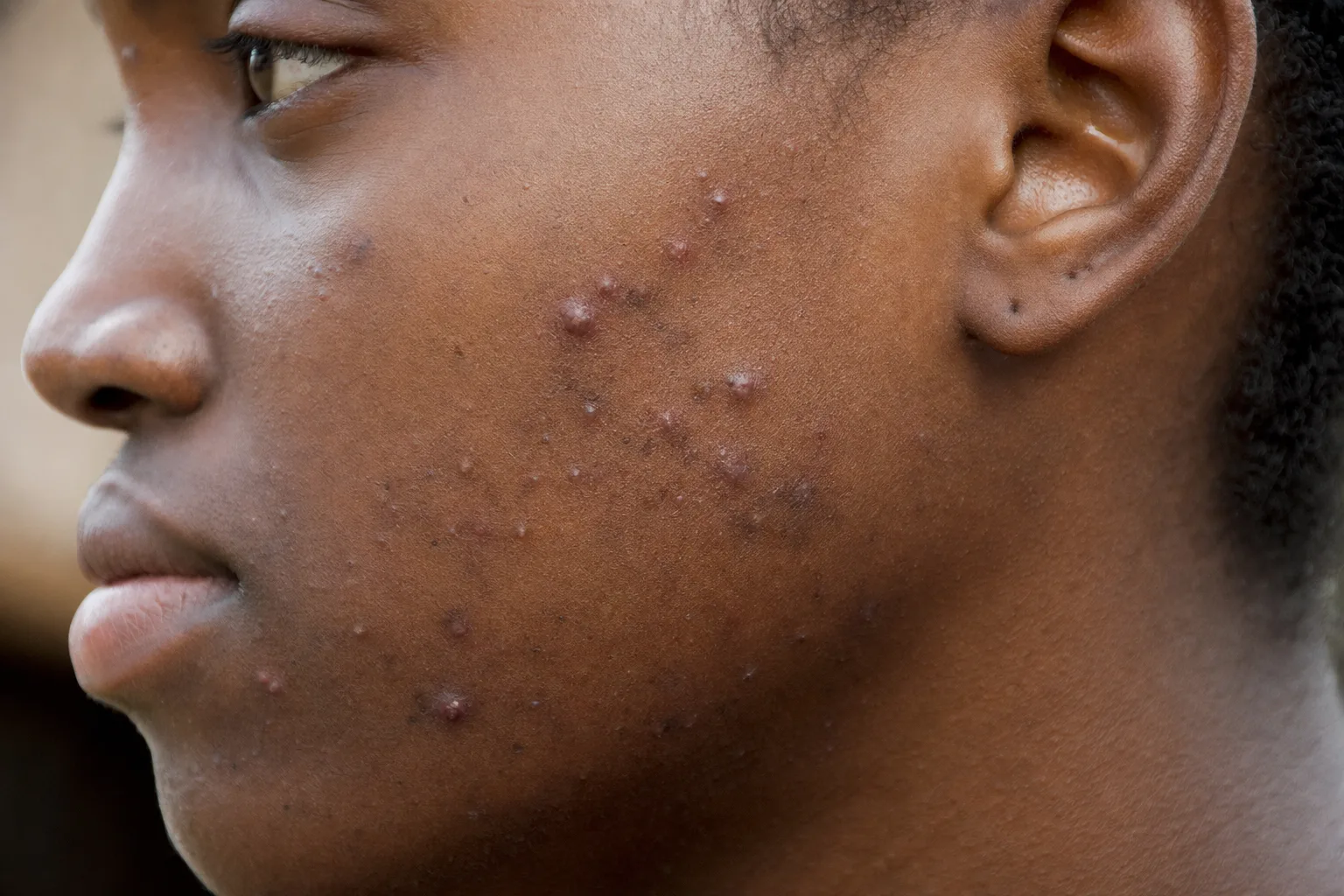
When a breakout heals, it often leaves behind a flat, discolored spot — technically called post-inflammatory hyperpigmentation. Run your finger over it: the skin feels smooth, with no texture change. It's just pigment, left behind by the inflammation of the breakout. This is what most people mean when they say "acne scars," and it's genuinely just a mark, not a scar.
Acne scars — a structural issue
True acne scarring involves an actual change in the skin's texture, not just its color. Run your finger over it and you'll feel a difference — a shallow indent ("ice pick" or "boxcar" scarring), a rolling unevenness, or occasionally raised, thickened skin. This happens when a breakout was deep or inflamed enough to damage the skin's underlying collagen structure as it healed.
| Acne Marks | Acne Scars | |
|---|---|---|
| Texture | Flat, smooth to the touch | Indented, raised, or uneven |
| Cause | Leftover pigment after healing | Collagen damage during healing |
| Typical timeline | Fades over weeks to months | Doesn't fade on its own — needs texture-focused treatment |
| What helps | Pigment regulation + exfoliation | Texture-focused approaches (often needs professional treatment for deeper scarring) |
The finger test
Close your eyes and run a fingertip over the mark. If you can't feel any difference from the surrounding skin, it's a mark — a pigmentation issue that responds well to a consistent skincare routine. If you can feel an indent or texture change, that's true scarring, and while a good routine still helps skin health and tone overall, deeper structural scarring may need a dermatologist's input for full correction.
Treating acne marks
Since acne marks are a pigmentation issue, they respond to the same regulate-and-exfoliate approach used for other hyperpigmentation: clear active breakouts first (to stop making new marks), then use pigment-regulating and exfoliating products consistently to fade existing ones.