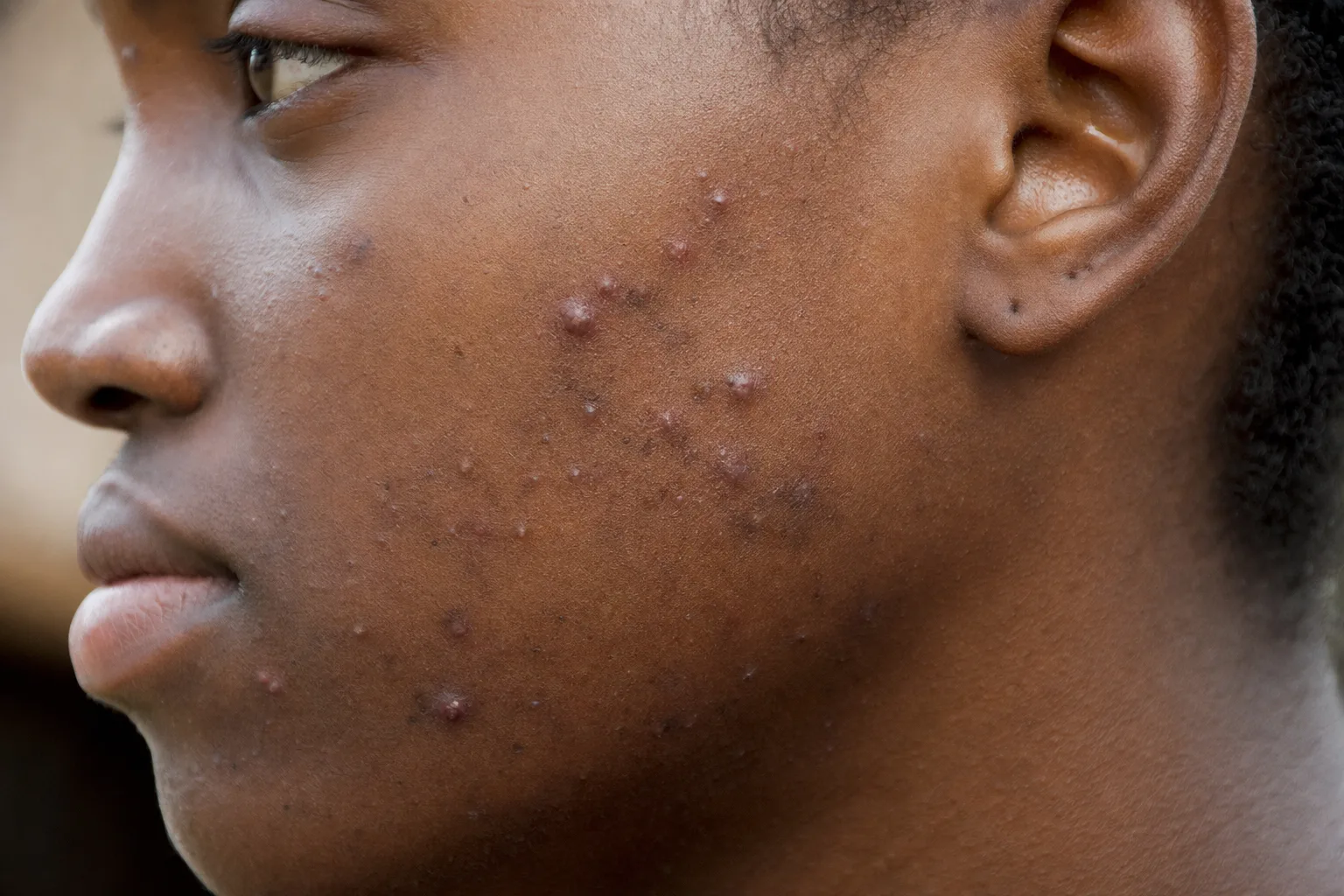
Blackheads and whiteheads are two of the most common — and most misunderstood — skin concerns. The good news: once you understand what they actually are, treating and preventing them becomes much more straightforward.
What they actually are
Both start the same way: a pore becomes clogged with excess oil and dead skin cells. The difference is exposure to air. A blackhead is a clog that stays open at the surface — the trapped oil oxidizes on contact with air and turns dark, which is why it's black, not because dirt is trapped inside. A whitehead is the same clog, but closed over by skin, keeping it white or skin-colored and slightly raised.
Why squeezing makes it worse
Squeezing can push debris deeper into the pore rather than out, triggering inflammation, and often leads to a more visible, harder-to-clear breakout — plus a higher risk of dark marks afterward on deeper skin tones. It's the single most common mistake people make with both blackheads and whiteheads.
Why the T-zone specifically
The nose, chin and forehead have a naturally higher concentration of oil glands than the rest of the face, which is why blackheads and whiteheads cluster there more than anywhere else — it's simply where the most oil is being produced.
The routine that clears and prevents them
Effective treatment addresses both existing clogs and the oil production that causes new ones — not just spot-treating what's already visible.
Pairing this with the Daily Deep Cleanser as a treatment-prep step ensures pores are properly cleared before treatment, so it can actually reach where it needs to work.
Prevention matters as much as treatment
Since clogs reform continuously as long as excess oil and dead skin are present, regular gentle exfoliation (not aggressive scrubbing) is what keeps pores clear long-term, rather than treating the same spots repeatedly after they clog again.