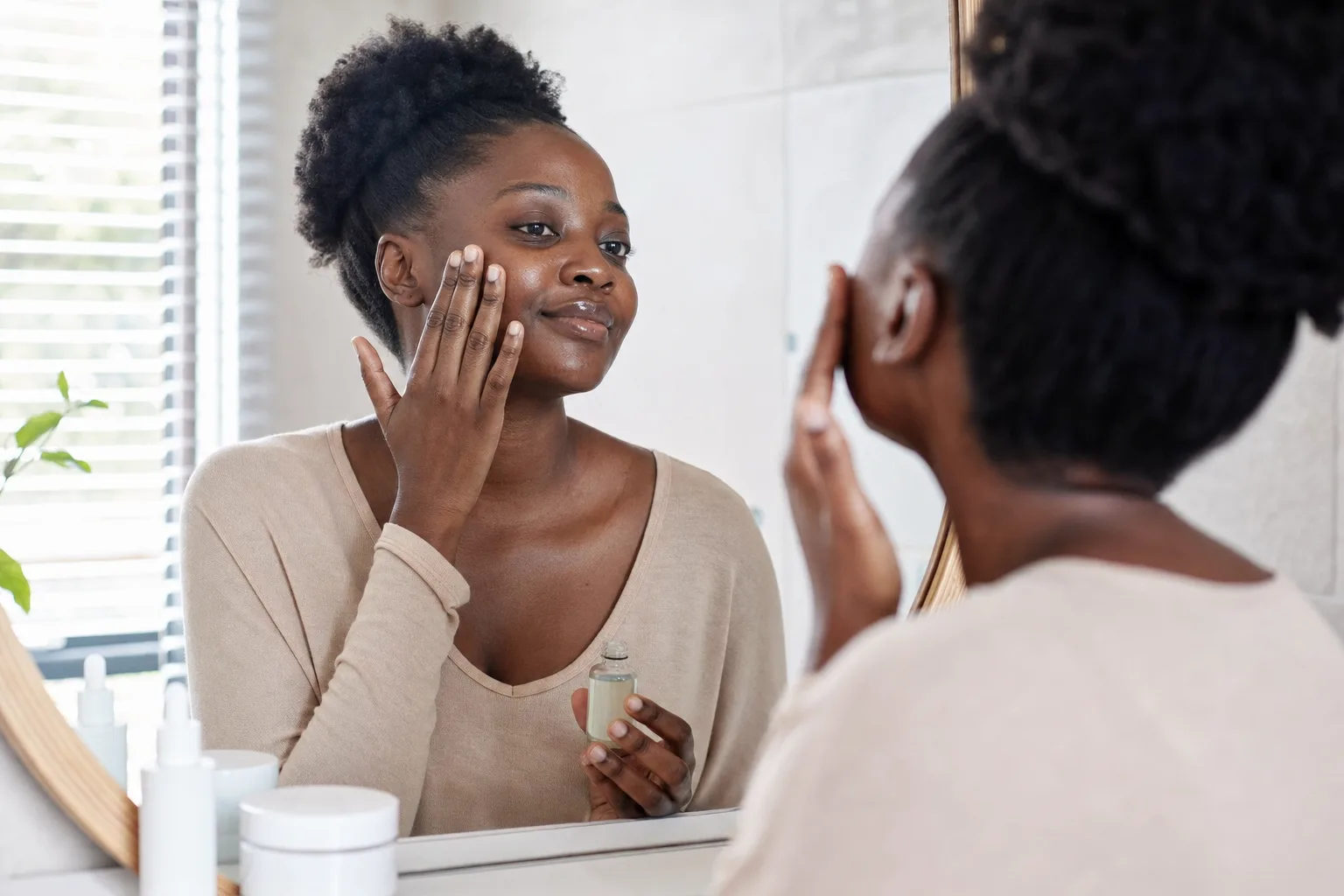
Ask around and you'll hear it constantly: *"We're Black, we don't burn, we don't need sunscreen."* It's one of the most expensive myths in African skincare — expensive because it's the reason so many people fight melasma, dark spots and dull, prematurely-aging skin that never fully clears. In Kenya, sitting almost on the equator, the sun is strong all year. This guide explains why SPF 50+ is essential for dark skin and how to choose and use it properly.
Does dark skin really need sunscreen?
Yes. It's true that melanin gives some natural sun protection — but only the equivalent of roughly SPF 4 to 13, far below the SPF 30–50 dermatologists recommend. That natural protection reduces sunburn, but it does not prevent the deeper damage UV causes on dark skin:
- Melasma and dark patches — UV is the single biggest trigger, switching pigment cells into overdrive.
- Dark spots that won't fade — sunlight re-darkens existing marks faster than any cream can fade them.
- Premature aging — UV breaks down collagen, causing fine lines, sagging and uneven texture over time.
- Dullness and uneven tone — chronic sun exposure leaves skin looking tired and patchy.
The equator factor
Kenya straddles the equator, where the sun's UV index is high all year — not just in 'summer'. Altitude in places like Nairobi raises UV exposure further. This is some of the strongest everyday sun on earth, which makes daily SPF more important here, not less.

What SPF 50+ actually means
SPF measures protection against UVB rays. SPF 50 blocks about 98% of UVB, versus about 97% for SPF 30 — a small percentage difference that matters a lot under intense, daily equatorial sun. Just as important is 'broad-spectrum', which means the sunscreen also protects against UVA rays — the ones most responsible for pigmentation and aging on dark skin. Always look for both: SPF 50+ and broad-spectrum.
The white cast problem — and how to beat it
The real reason many people with dark skin avoid sunscreen isn't doubt — it's the ashy grey or white cast some formulas leave. Good news: this is solvable.
- Choose a sunscreen formulated to blend into deeper skin tones rather than a thick, chalky mineral-only formula.
- Apply to slightly damp skin and warm it between your fingers first, then press and massage it in fully.
- Use enough (about a two-finger length for the face) but build in two thinner layers rather than one thick one to avoid cast.
- Give it 2–3 minutes to settle before applying anything on top.
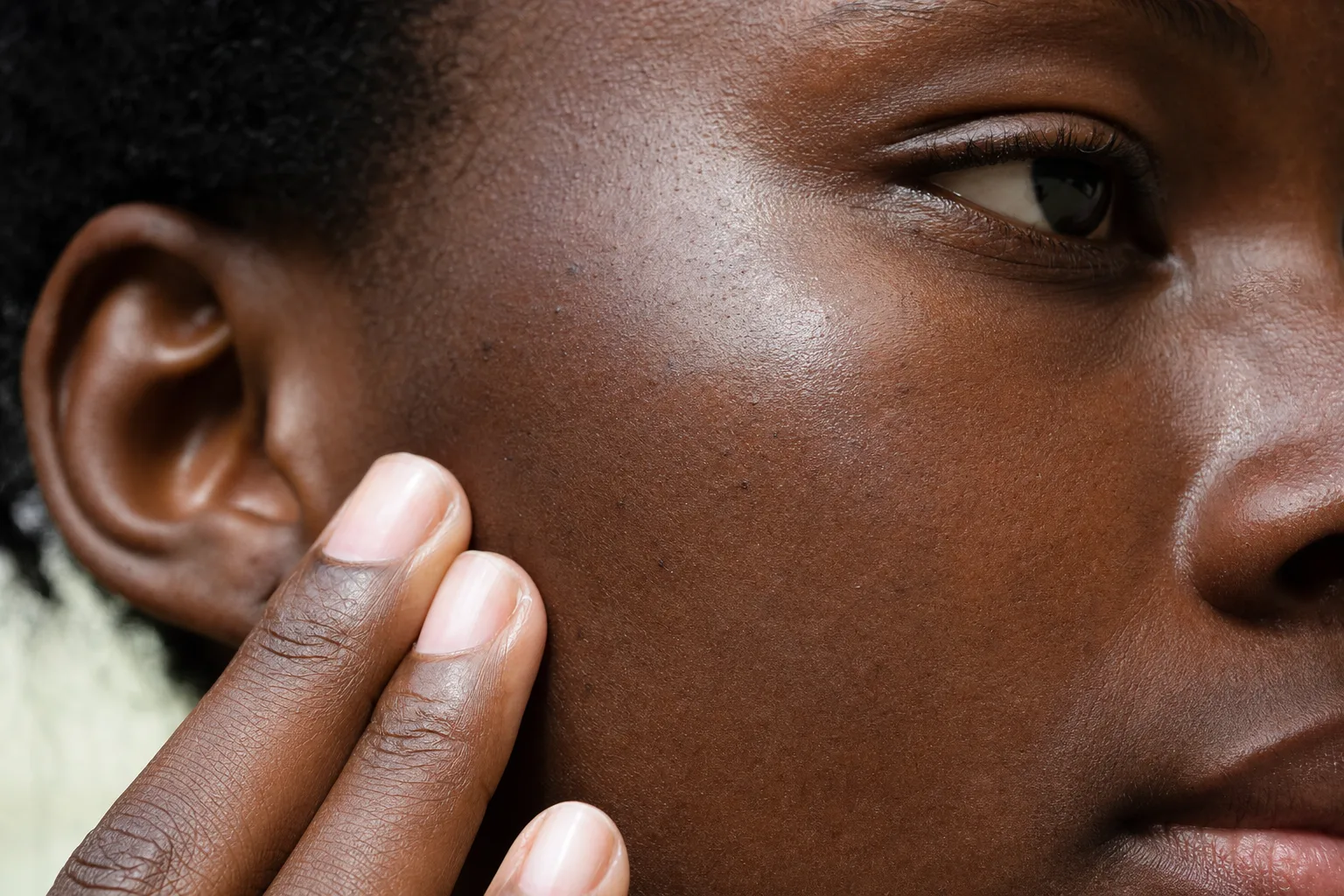
How to use sunscreen (the part everyone gets wrong)
- 1Apply every morning as the last step of your routine, after your treatment and moisturiser.
- 2Use it even when it's cloudy or you're indoors — UVA passes through clouds and windows.
- 3Reapply every 2–3 hours when you're outdoors for long stretches, sweating or swimming.
- 4Don't forget the ears, neck and the tops of your hands — common spots for sun-driven pigmentation.
Sunscreen is the secret to keeping your results
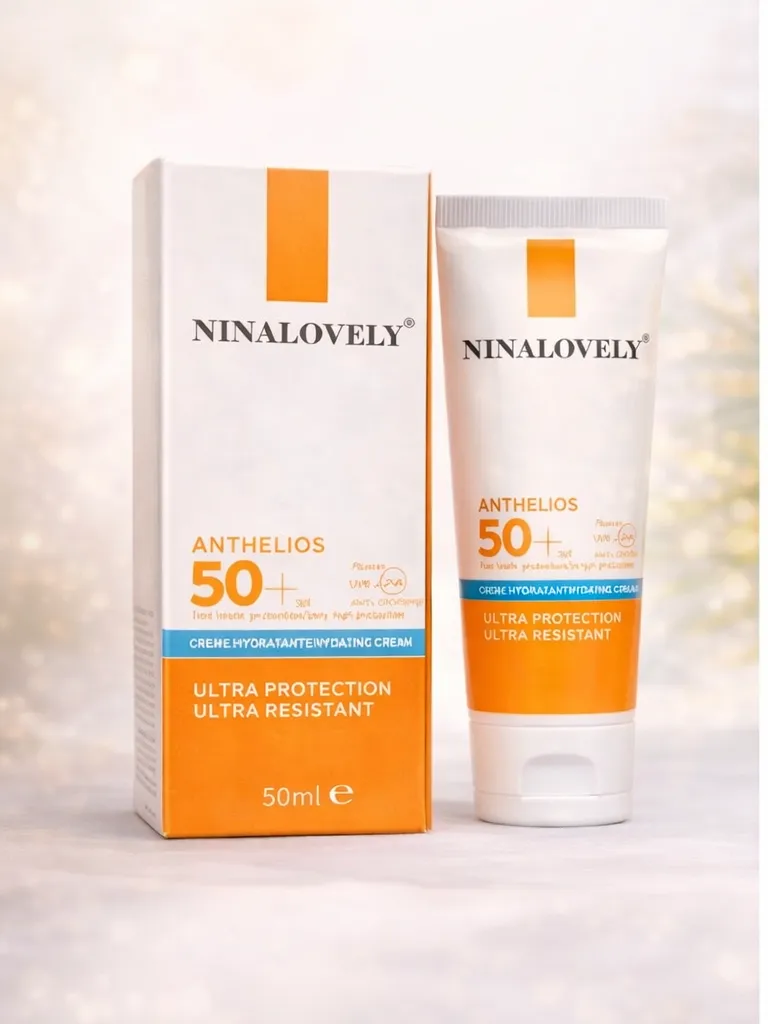
Here's the part that ties everything together. If you're treating melasma, dark spots or acne marks, sunscreen is what protects that investment. UV undoes pigment correction faster than any treatment can fix it — which is why people say their dark patches 'always come back'. They come back because the skin is unprotected. Our SPF 50+ Sunscreen is built as the protection step of a correction routine: it shields treated skin from re-darkening so your results actually last.
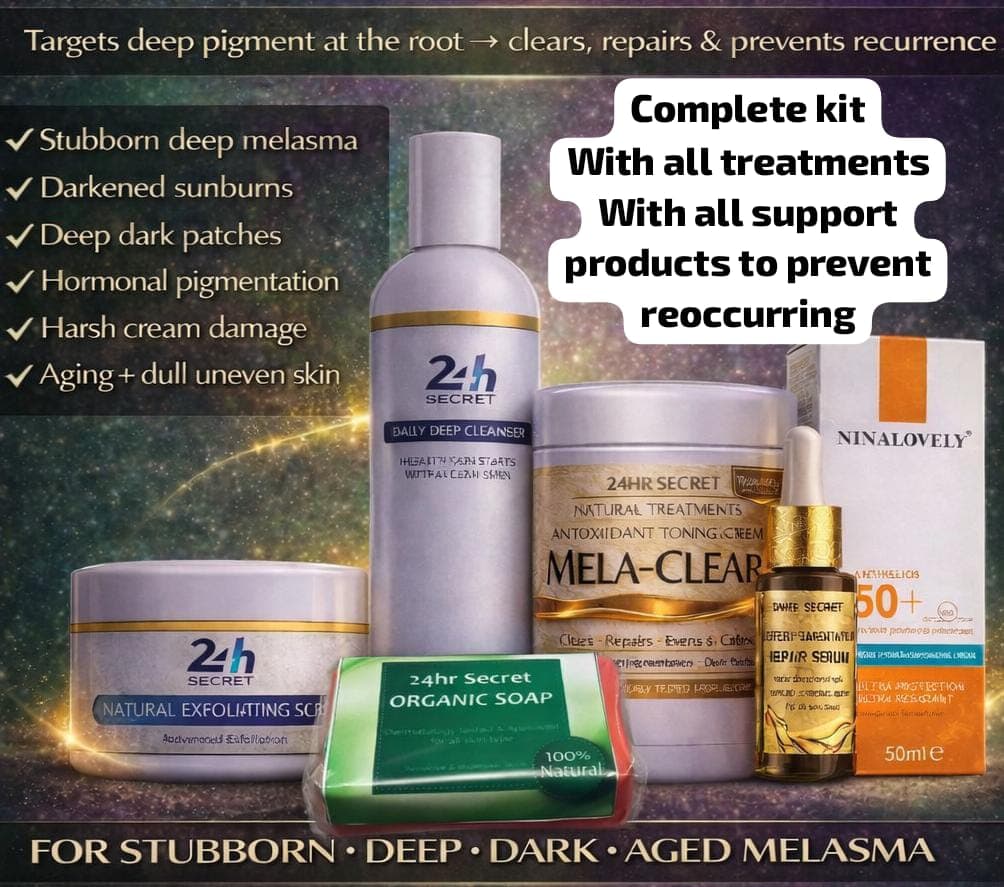
If you're correcting pigmentation, sunscreen shouldn't be an afterthought bought separately. That's why it's built into our Complete Full Melasma Treatment Kit — correction and protection in one system, so nothing you fade comes back.
Sunscreen for oily and acne-prone skin
If your skin is oily — common in Kenya's heat — you don't get to skip sunscreen, but you should choose a lighter, non-greasy formula and apply thin layers. Sunscreen does not cause acne when you cleanse properly at night. In fact, protecting acne-prone skin from the sun is essential for fading the dark marks breakouts leave behind.