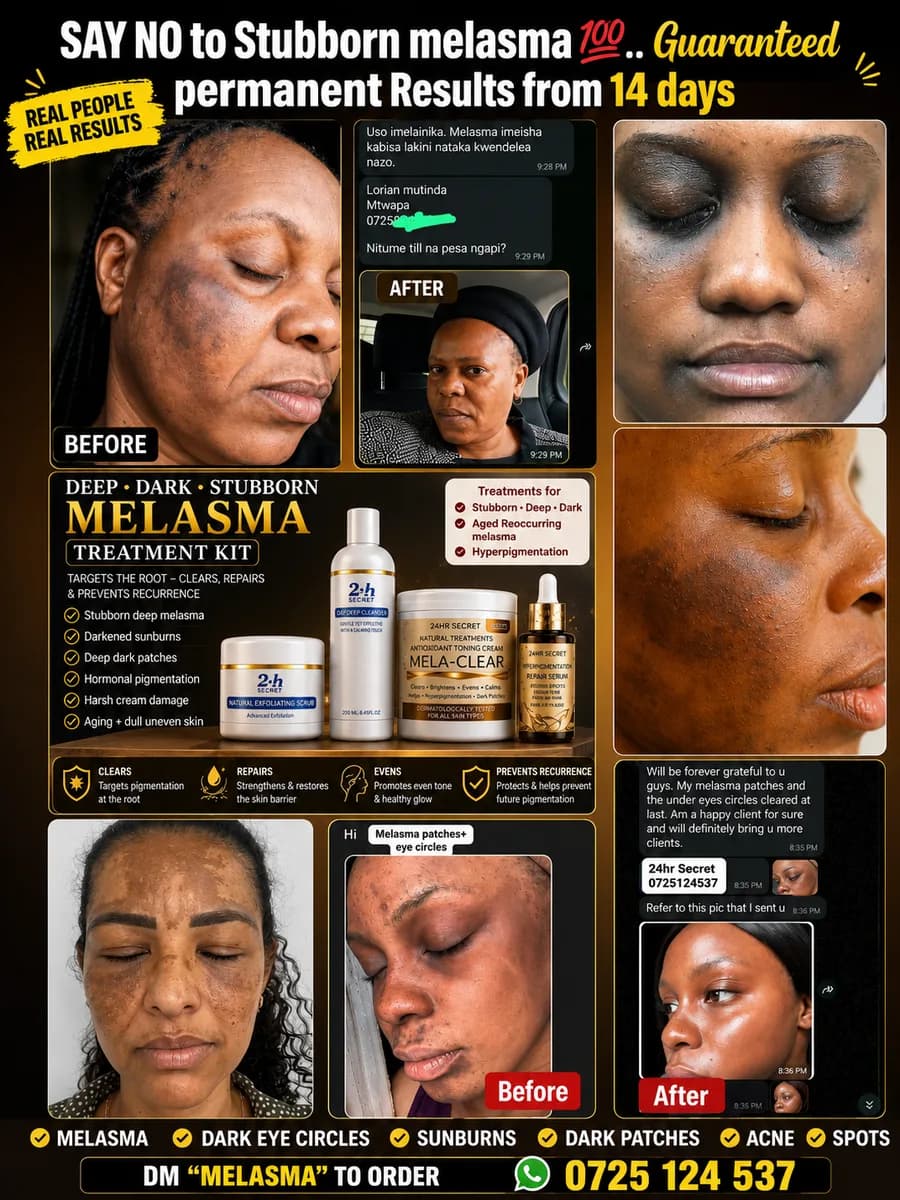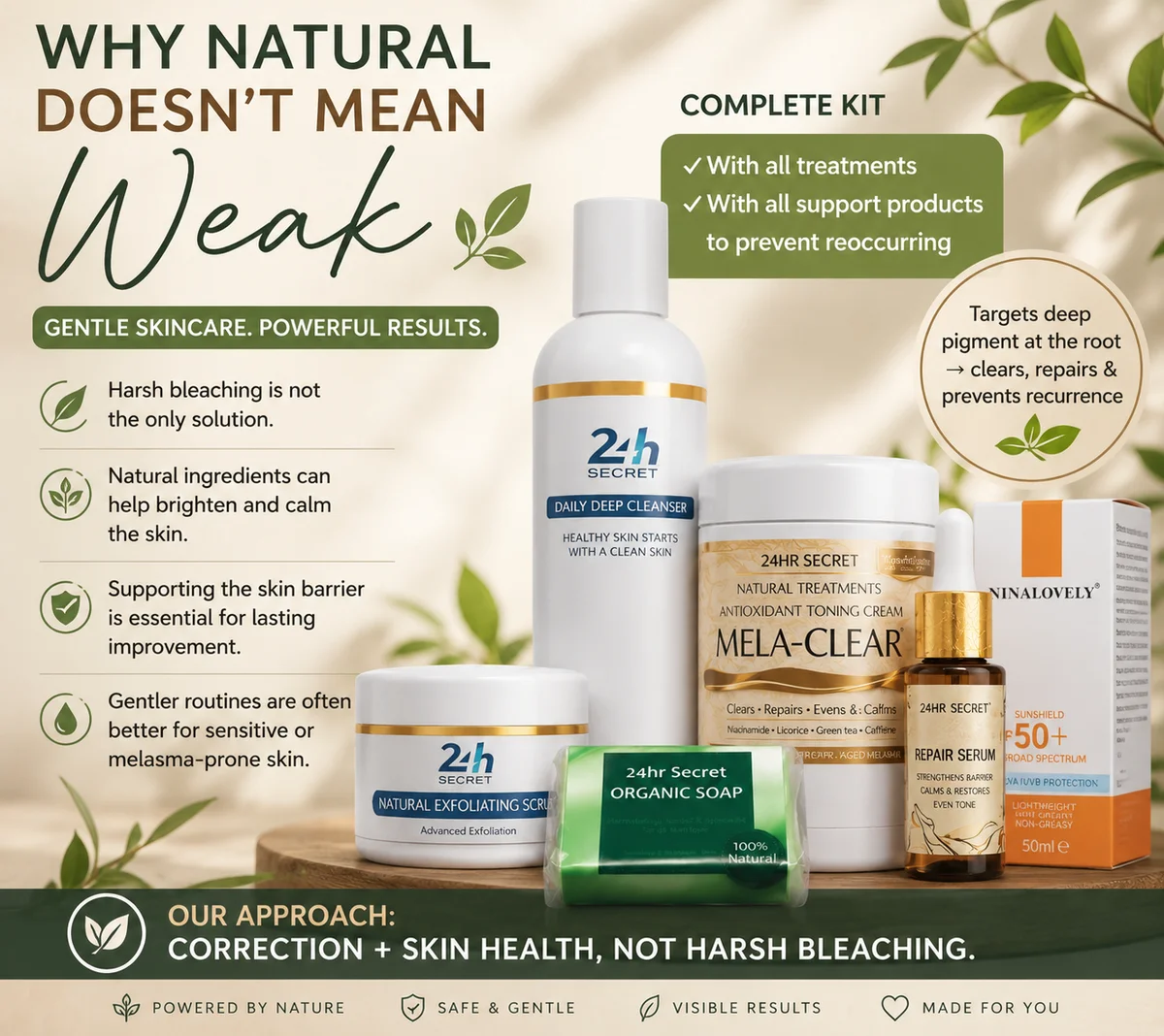
"Does natural skincare actually work, or is it just slower and weaker than bleaching?" It's one of the most common questions we get — and a fair one, given how much marketing conflates "gentle" with "ineffective." The honest answer: natural, well-formulated ingredients can correct pigmentation, acne and aging just as effectively as harsh agents — the difference is what happens to your skin along the way.
What bleaching actually does
Bleaching creams — especially those with mercury or misused high-dose hydroquinone — work by aggressively suppressing melanin production. This can fade pigment quickly, but often at a real cost: thinning skin, increased sensitivity, a greyish undertone, and a heightened risk of pigmentation returning darker once the product is stopped or the skin can no longer tolerate it.
Harsh bleaching is not the only solution
Natural ingredients can help brighten and calm skin. Supporting the skin barrier is essential for lasting improvement — gentler routines are often better for sensitive or melasma-prone skin specifically, not just as a fallback for people who can't tolerate stronger products.
How natural correction actually works
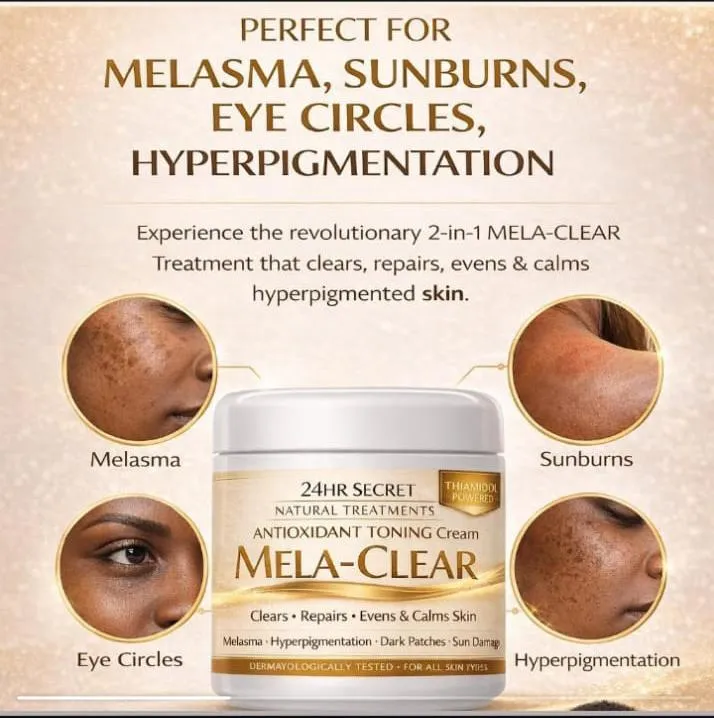
- Regulates, rather than suppresses. Ingredients like Thiamidol and antioxidants calm overactive melanocytes at the source, addressing why excess pigment is being produced instead of just bleaching what's already there.
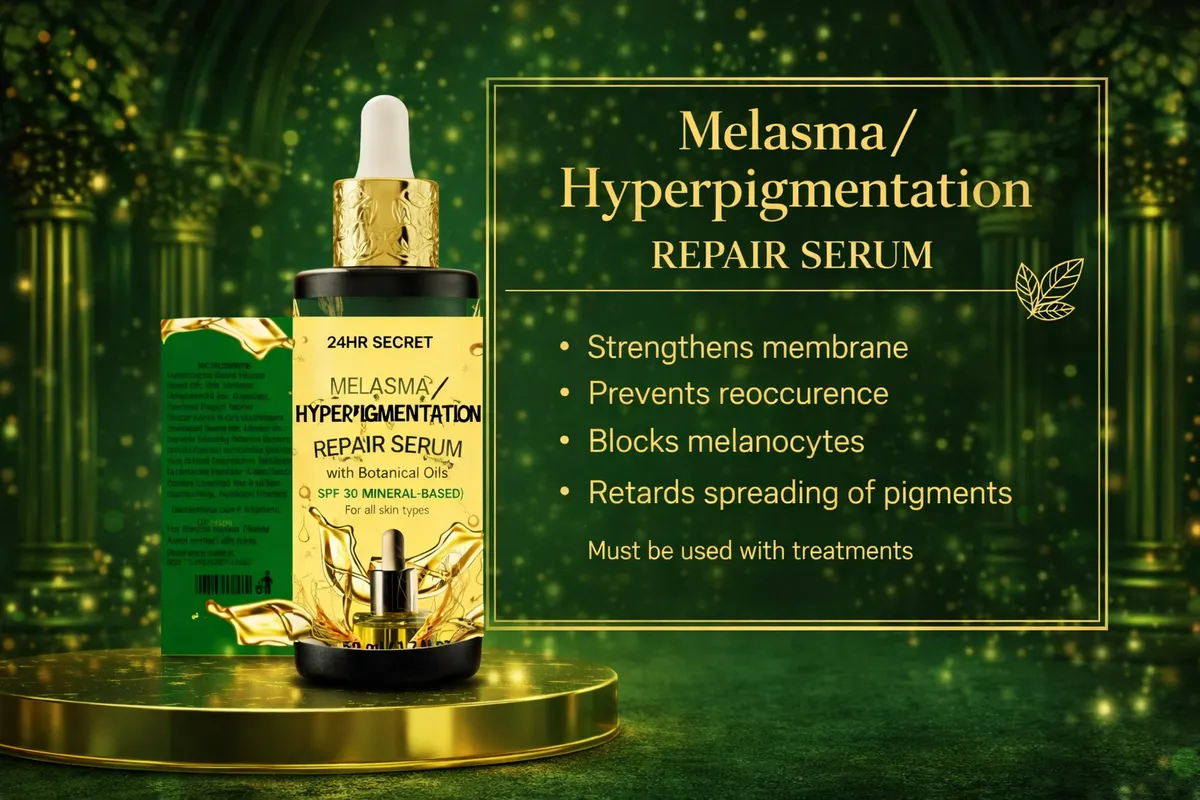
- Repairs while it treats. A strong skin barrier is more resistant to the triggers (sun, inflammation, irritation) that cause pigmentation in the first place — natural formulations can support this at the same time as active correction.
- Works with the skin's own processes. Gentle exfoliation, barrier support and pigment regulation together mimic and support what healthy skin does naturally, rather than overriding it.
Gentle doesn't mean slow
This is the misconception worth correcting directly: natural doesn't mean you have to wait months longer for any visible change. With consistent use, most people see initial improvement within 2-4 weeks — the difference from bleaching isn't primarily speed, it's that results build without damaging the skin that's carrying them.
Why this approach lasts longer
Because natural correction supports skin health alongside pigment regulation, results tend to hold once achieved — provided daily sun protection continues. Bleaching-damaged skin, by contrast, is often more reactive long-term, making relapse more likely even after the same amount of visible improvement.