There are three fundamentally different ways to respond to a dark patch: hide it, suppress it, or address why it's there. Only one of those actually changes anything long-term, and it's usually the slowest and least dramatic of the three.
Masking — instant, but changes nothing
Concealer, color-correcting products, and some "instant brightening" formulas work by optically covering pigmentation, not treating it. The moment you stop using them, the pigmentation is exactly as it was. This isn't a criticism — masking has its place for daily confidence — but it should never be confused with treatment.
Suppressing — fast, but doesn't ask why
Bleaching agents forcibly shut down melanin production without addressing why it was elevated in the first place — often hormones, sun exposure, or inflammation. Once you stop suppressing, if the underlying trigger is still active, pigment production often resumes, sometimes more aggressively.
Root-cause treatment — slower, but it holds
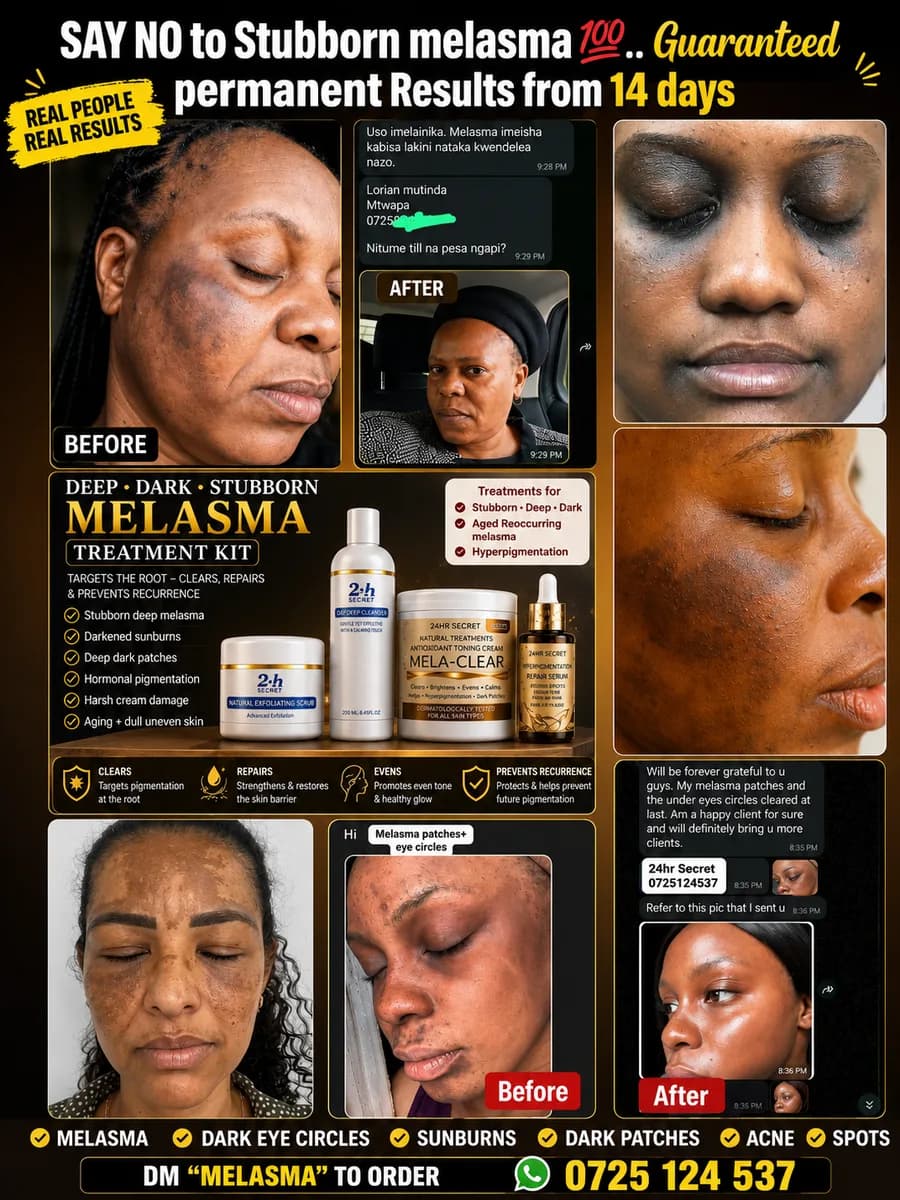
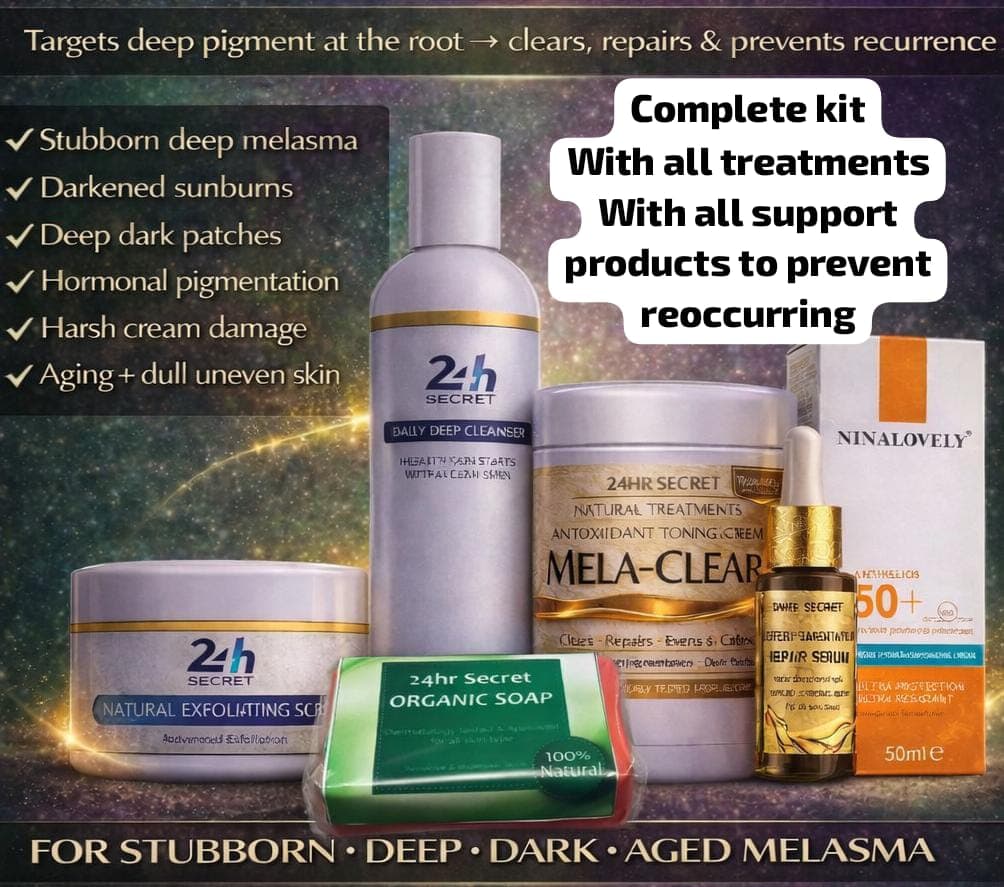
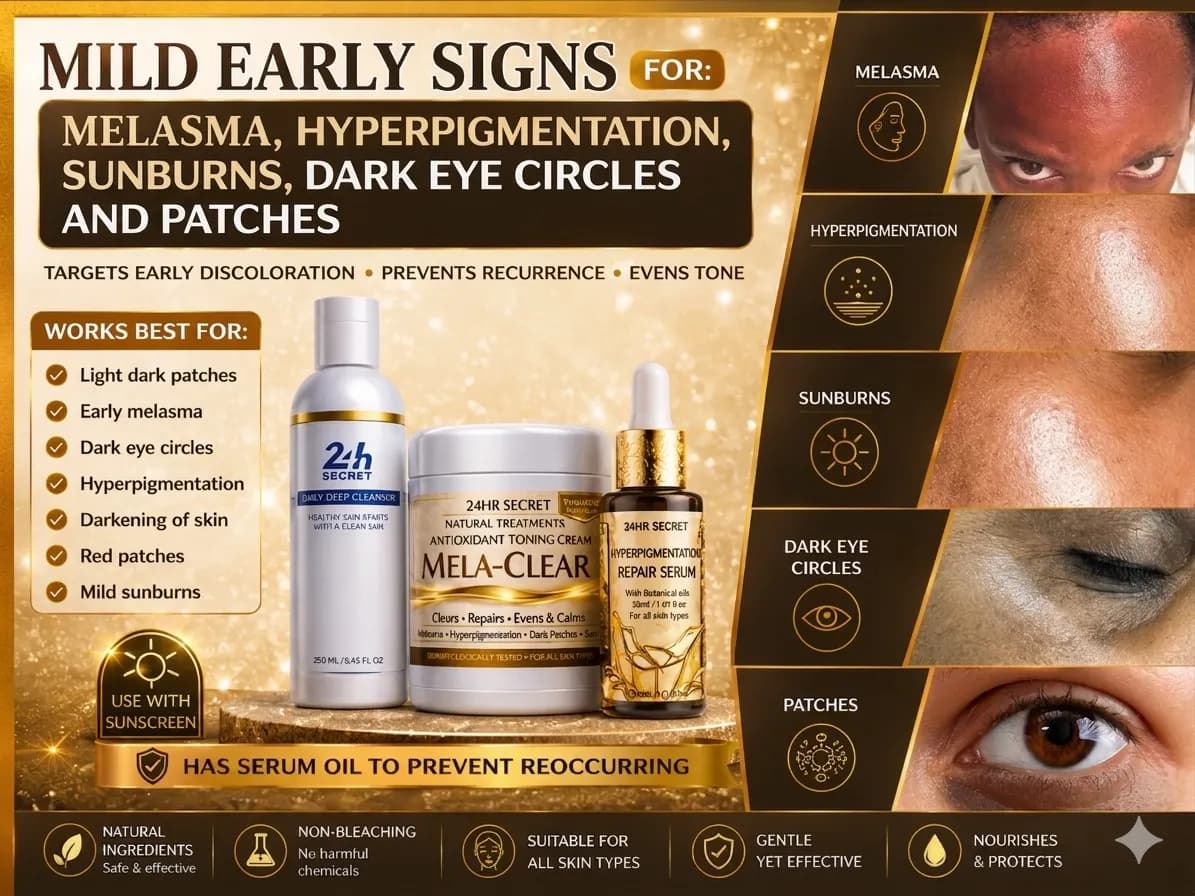
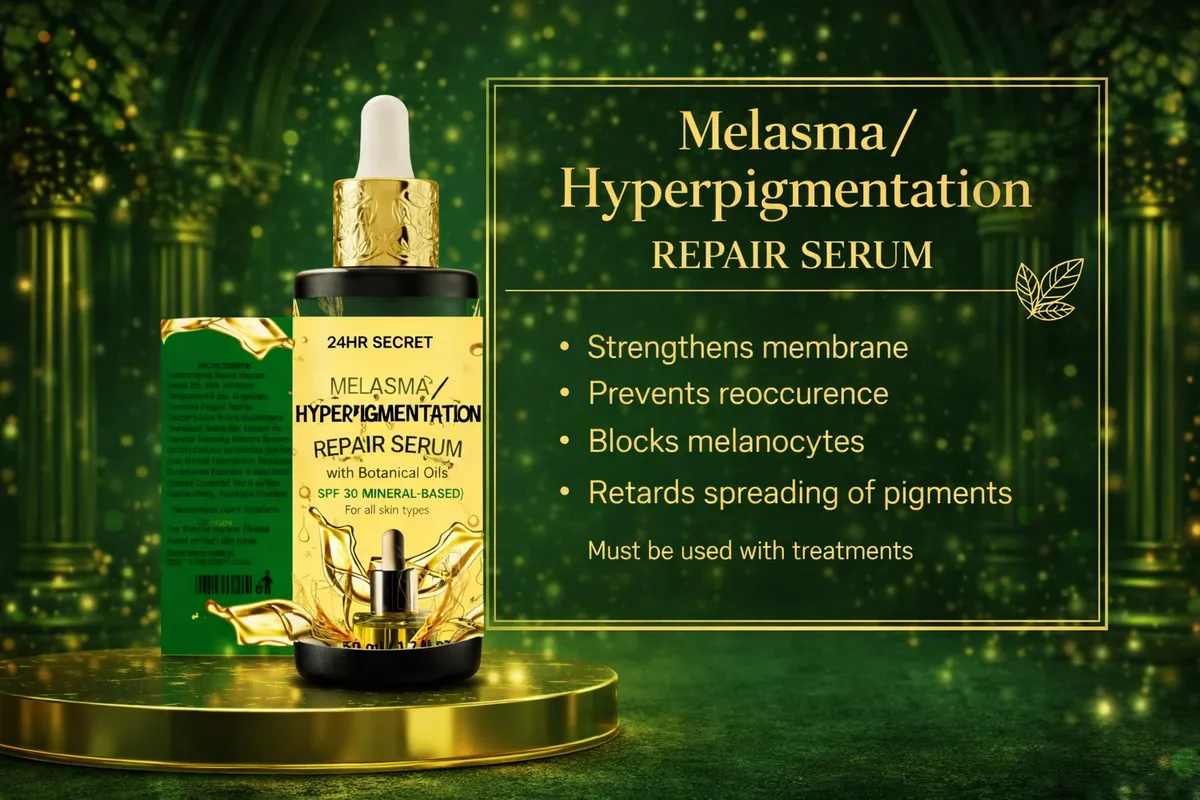
Genuine correction asks: why is this pigment cell overproducing? Usually it's some combination of hormonal triggers, UV exposure, inflammation, or a weakened barrier that can't regulate itself properly. Treating the cause means regulating pigment production gently, repairing the barrier so it can self-manage again, and protecting against the UV that keeps re-triggering the cycle — which is exactly the structure behind every 24HR SECRET kit.
How to tell which approach a product actually uses
Ask what it claims to do. "Instantly brightens" or "visibly reduces the appearance of" often signals masking. "Fast results in days" combined with dramatic claims often signals suppression. "Regulates," "repairs" and realistic multi-week timelines usually signal genuine, cause-based treatment.